
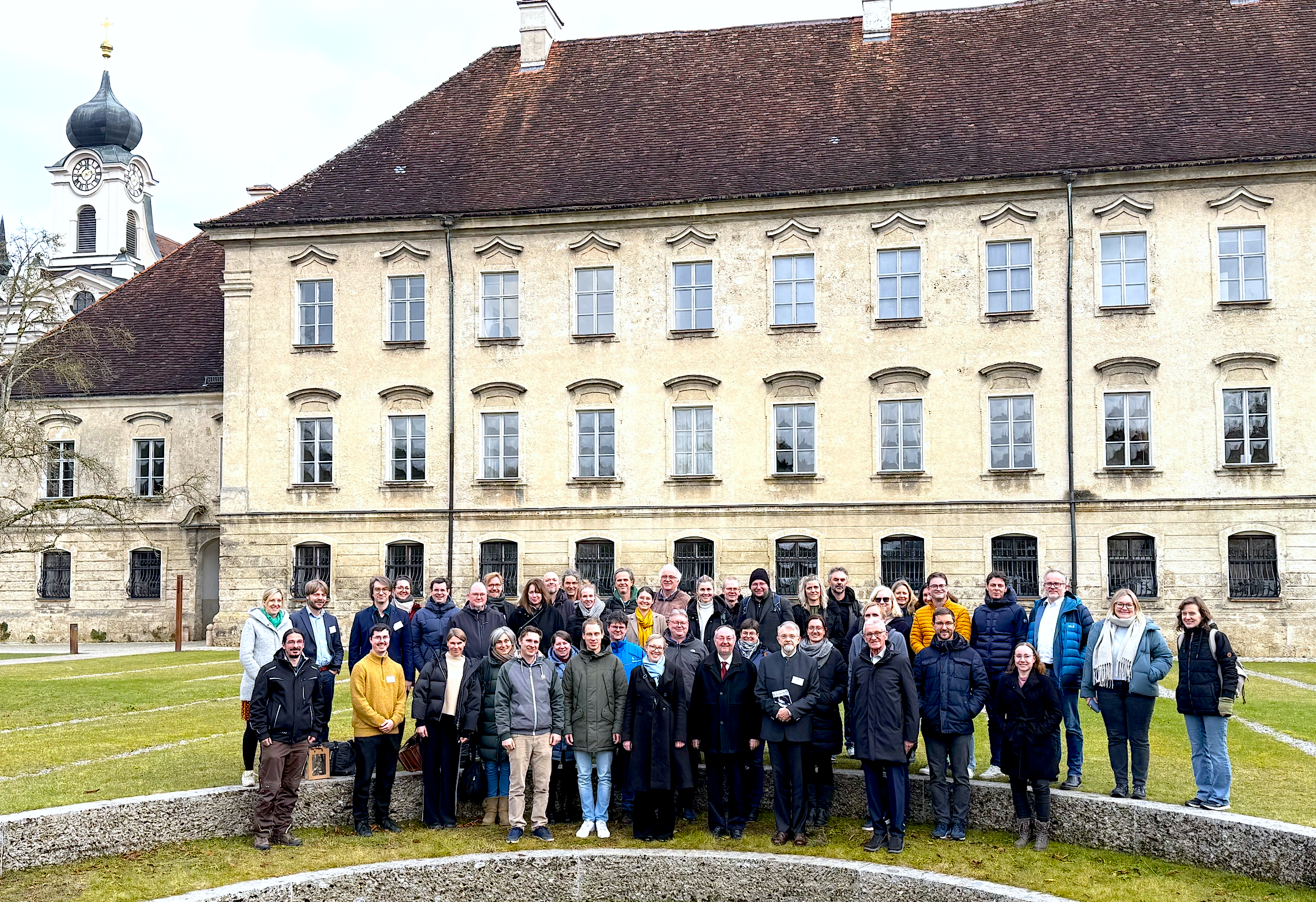
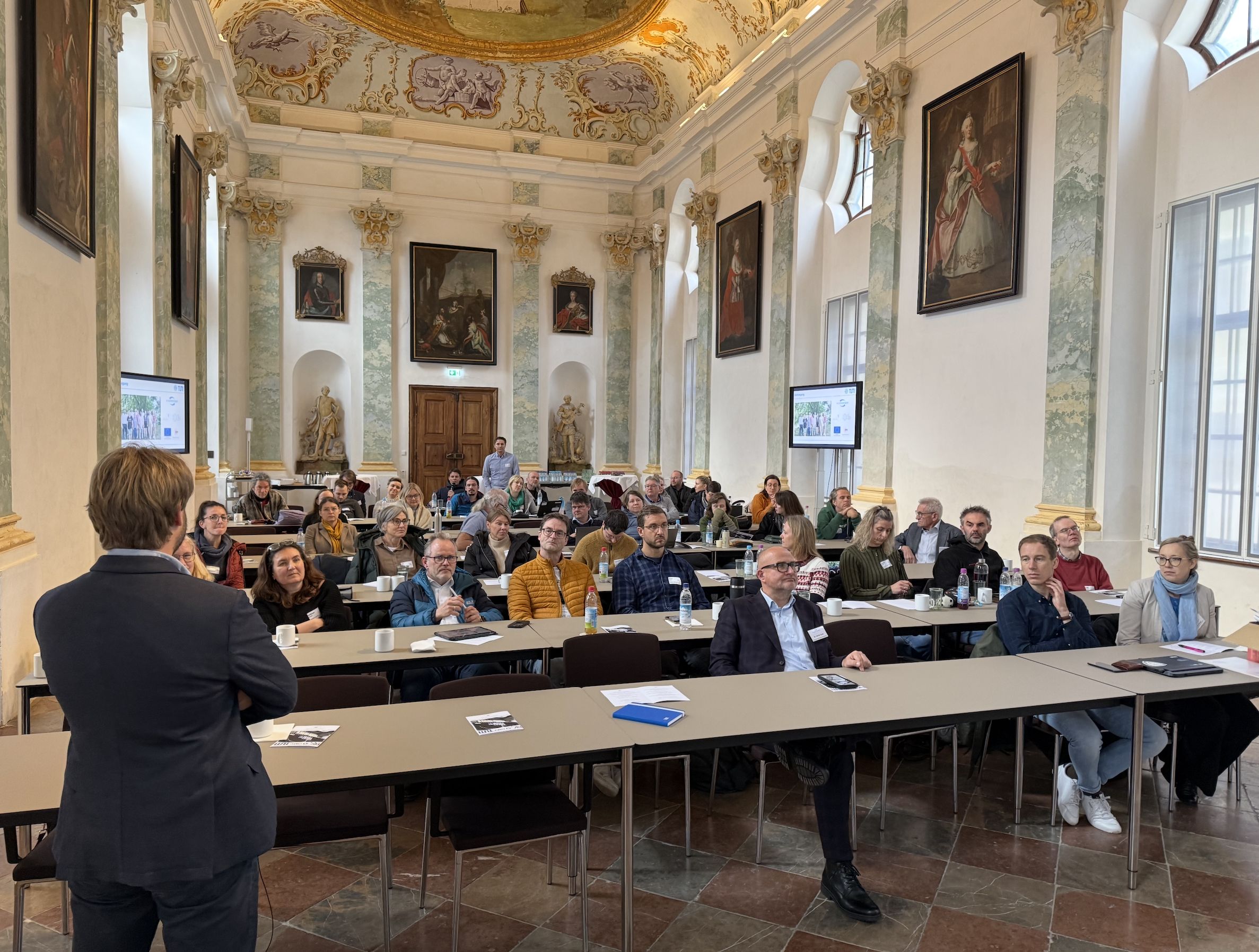
On November 27 and 28, 2025, the 11th Ernst Otto Fischer Seminar for teacher training took place in TUM Science & Study Center Raitenhaslach. Since 2012, the seminar has been organized under the patronage of the Technical University of Munich (TUM) in cooperation with the Aventinus-Gymnasium Burghausen and supported by the Johannes B. Ortner Foundation. The goal of the event is to provide chemistry teachers from across Bavaria with access to the latest findings from research and industry, enabling them to bring current scientific content into their classrooms.
The seminar was officially opened by Prof. Fritz E. Kühn, Vice Dean of Academic & Student Affairs at the TUM School of Natural Sciences, Dr. Ulrich Kanz, Principal of Aventinus-Gymnasium Burghausen, and Ingrid Heckner, Deputy District Administrator of the Altötting district.
A multifaceted first seminar day
After a joint breakfast, the Thursday program began with a diverse series of lectures.
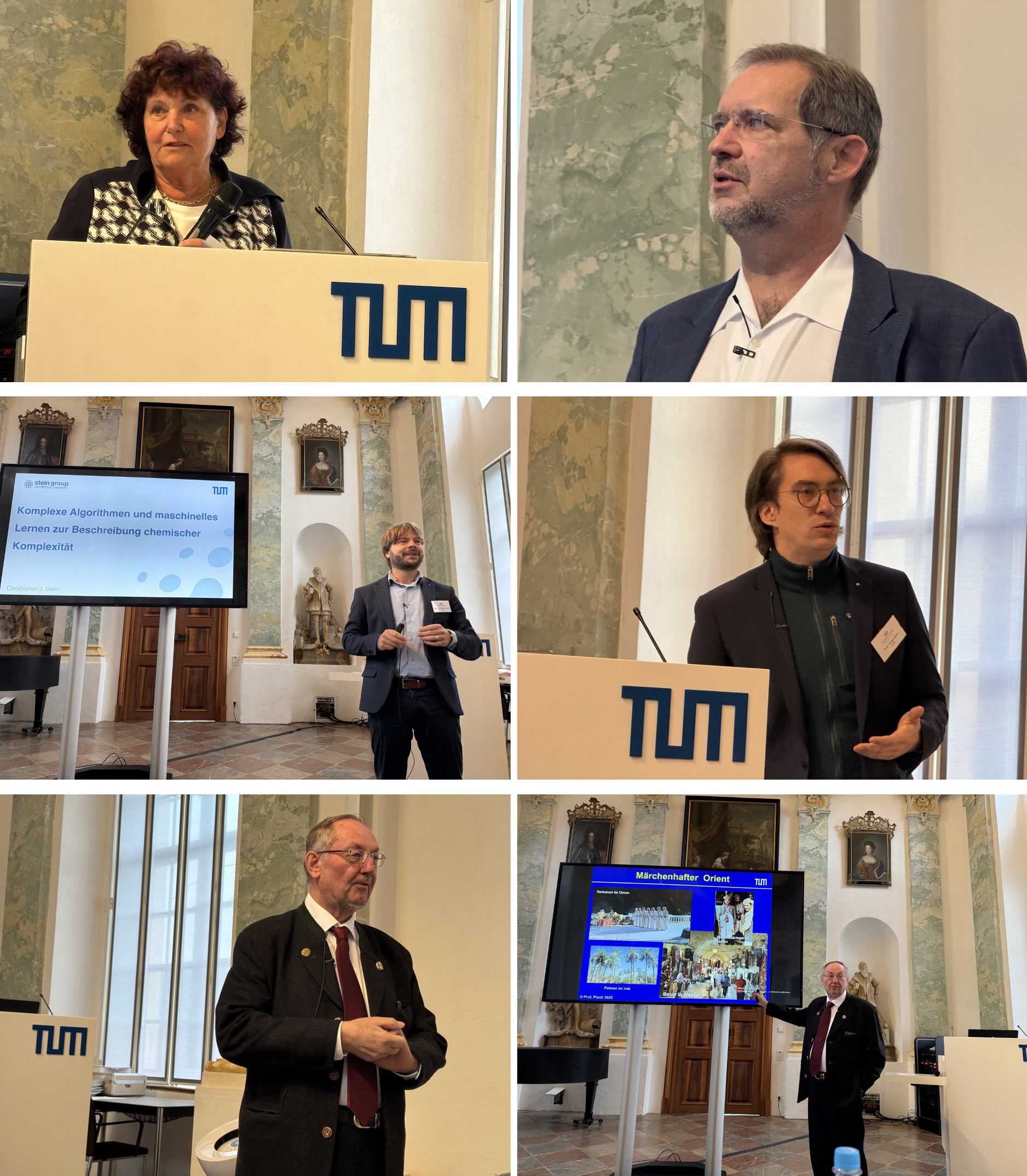
The first presentation was given by Prof. Richard Fischer (TUM): “The Societal Importance of Catalysis as a Cross-Sectional Technology – Catalysis Is Always and Everywhere”, highlighting the omnipresent relevance of catalytic processes.
He was followed by Prof. Christopher Stein (TUM), who presented his talk “Complex Algorithms and Machine Learning for Describing Chemical Complexity”, exploring the growing role of data-driven methods in modern chemistry.
After lunch at the Raitenhaslach Monastery Inn, Prof. Johann Plank (TUM) presented “The Science of the Arabs in the Golden Age of Islam”, emphasizing the historical contributions of Arab scholars to the natural sciences.
Next, Prof. Helge Stein (TUM) discussed “Automation and Machine Learning in Chemistry”, focusing on current developments in laboratory automation and AI-supported research.
The first day concluded with Dr. Dieter Hoffmann (TUM) and his lecture “Zoonoses as Triggers of the Major Pandemics of the 20th & 21st Century”, examining the role of animal-borne pathogens in global disease outbreaks.
Industrial insights on the second day
Friday began with an introduction by Sebastian Rubin (OMV): “Introduction and Safety Briefing for the Tour of the Burghausen Refinery.” The subsequent tour of the OMV Burghausen refinery took participants through laboratories, the central control room, and the plant’s large-scale industrial facilities. A shared lunch provided time for exchange and discussion.
To conclude the seminar, Prof. Dominik Pentlehner (Rosenheim Technical University of Applied Sciences) presented “Photocatalysis – A Green Method in Chemistry and Environmental Technology,” outlining sustainable photochemical processes and their benefits for environmental applications.
As a farewell gift, all speakers received a bottle of the school’s own home-brewed beer as well as products from its beekeeping program at Burghausen Grammar School.
Training with lasting impact
The Ernst Otto Fischer Seminar once again offered a unique combination of scientific depth, historical context, and practical industrial application in 2025. With its wide-ranging program, it strengthens the role of teachers as multipliers of cutting-edge research and promotes contemporary, research-oriented chemistry education in Bavarian schools.
We would like to express our sincere gratitude to the Aventinus-Gymnasium Burghausen—especially to Alexander Schuster and Monika Spiegel for their excellent organization—as well as to the Johannes B. Ortner Foundation for its generous financial suppor
Further Information
- Aventinus-Gymnasium Burghausen
- Prof. Fritz Kühn, Professorship of Molecular Catalysis
- TUM Science & Study Center Raitenhaslach
- The next Ernst Otto Fischer Seminar is scheduled for October 15 and 16, 2026.
Press contact
communications(at)nat.tum.de
Team website