
For almost a century, one of the world’s largest collections of synthetic pyrroles and porphyrins lay dormant—until modern analytical methods brought it back to life. The chemical library of Nobel laureate Hans Fischer (1881–1945), preserved in thousands of glass ampoules, is now being systematically analyzed—with some surprising results.
Historical Heritage in Glass Ampoules
Hans Fischer, pioneer of porphyrin chemistry and Nobel Prize laureate in 1930, synthesized more than 20,000 pyrrole and porphyrin compounds together with his collaborators. These were crucial for understanding blood pigments (heme) and plant pigments (chlorophyll). Hans Fischer worked with modest means: elemental analysis, melting point determination, and handheld spectroscopes were sufficient for his structural elucidations.
His substances were stored in glass ampoules — and after his death in 1945, they were largely forgotten. In 2022, a team led by Prof. Wolfgang Eisenreich from the TUM School of Natural Sciences (NAT) began digitizing this collection and reanalyzing it with modern techniques such as NMR spectroscopy, GC-MS, FT-IR, and UV/VIS spectroscopy.
From Teaching Project to Publication
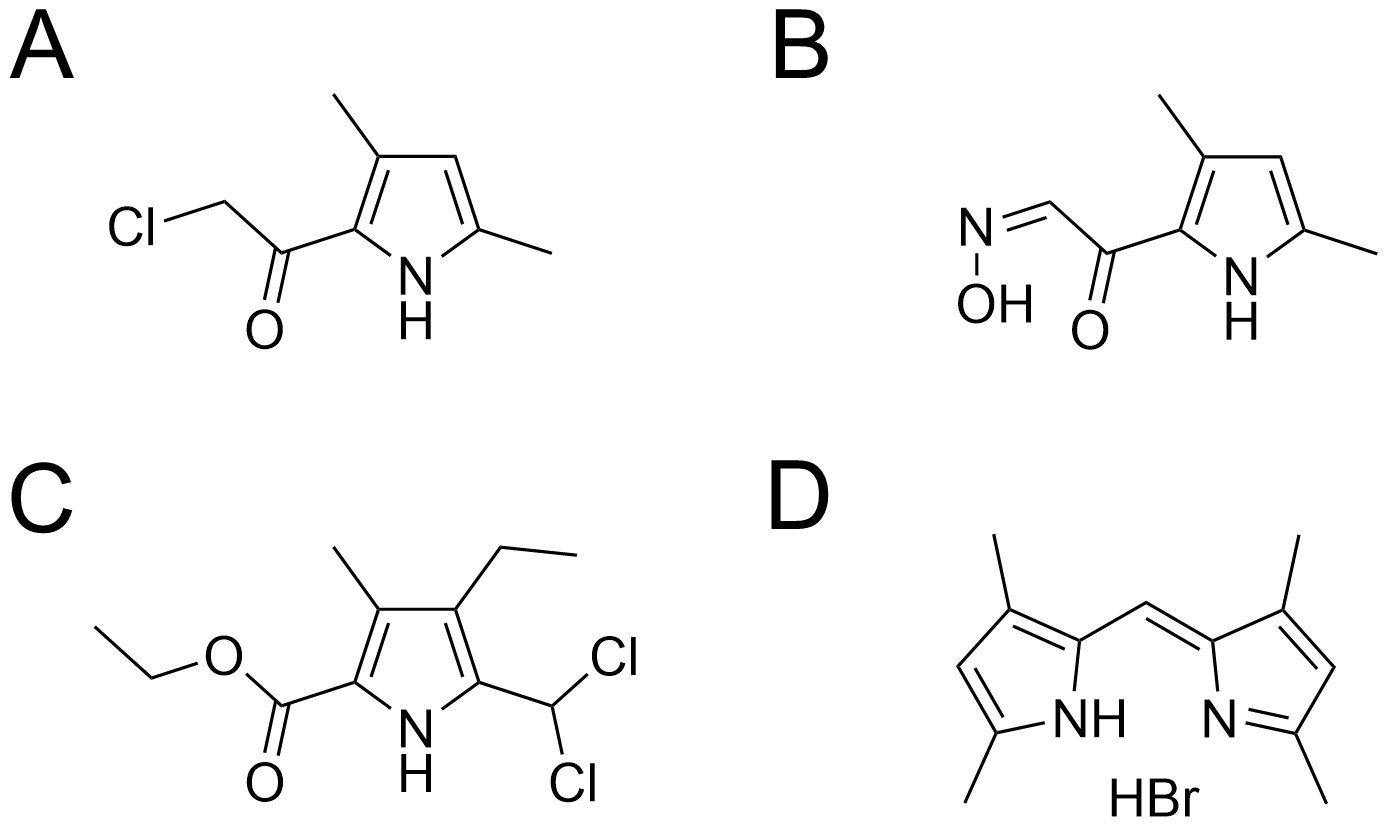
As part of a teaching project, students of the TUM School of Natural Sciences have so far examined around 300 samples. Four substances in particular were the focus of attention and have now been fully recharacterized:
- Compound A “Barat 1” – a chloroacetyl pyrrole that has remained surprisingly stable and today serves as a precursor for potential anticancer drugs.
- Compound B “Barat 2” – originally described as a hydroxylamine derivative, but revealed under NMR and GC-MS to be an oxime. A rare case where Fischer’s original structural formula had to be corrected — or where the product was not stable over time.
- Compound C “Friedrich A27” – a chlorinated pyrrole ester that was of great importance for condensation reactions.
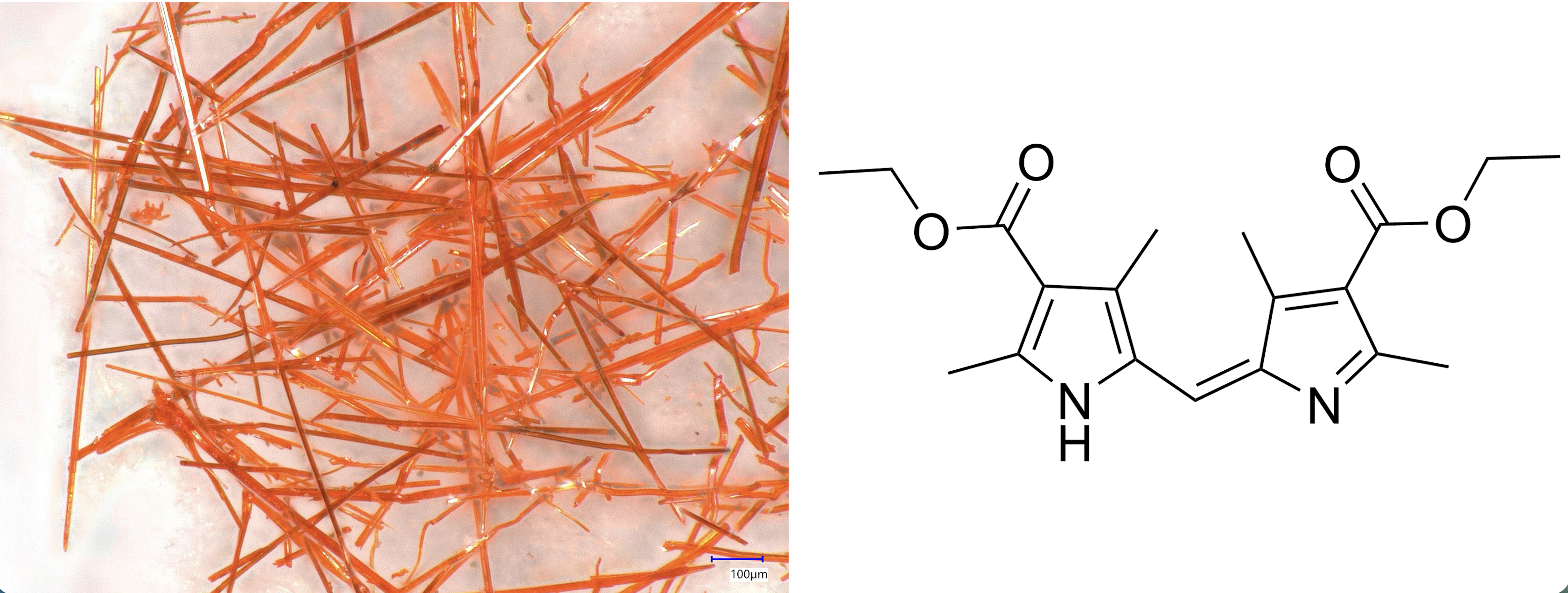
- Compound D “Grom B30” – a symmetric bipyrrole that not only possesses interesting photophysical properties but can also act as a ligand for organometallic dyes.
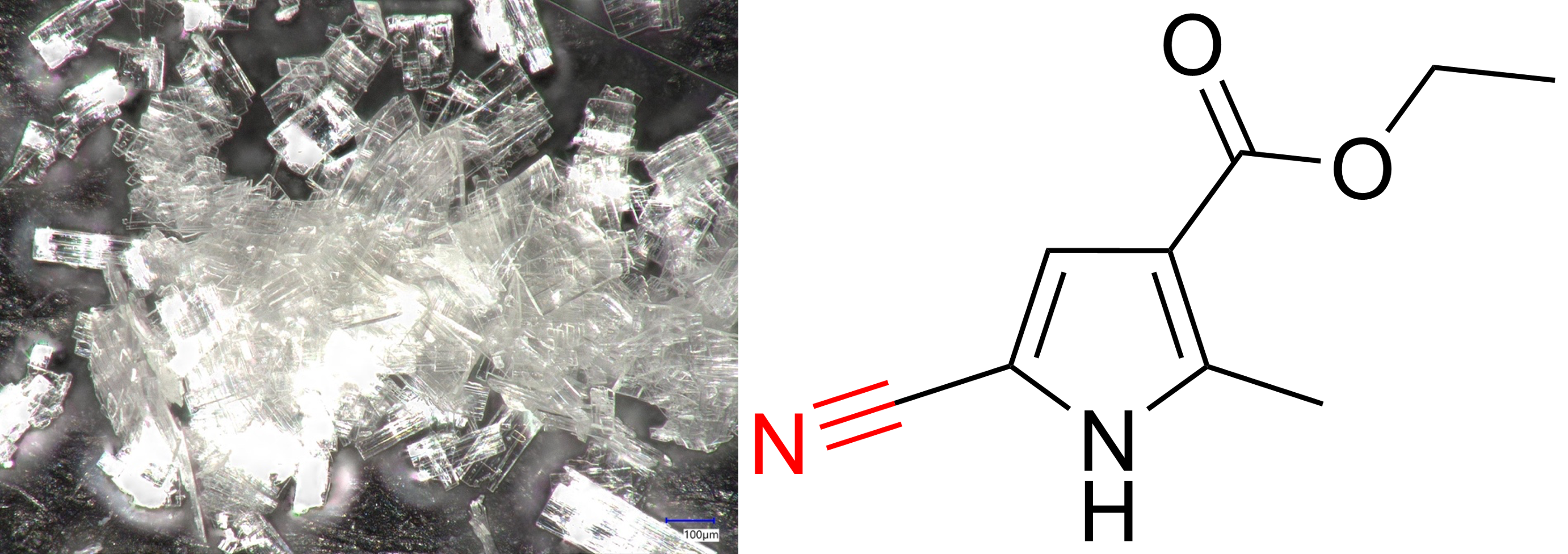
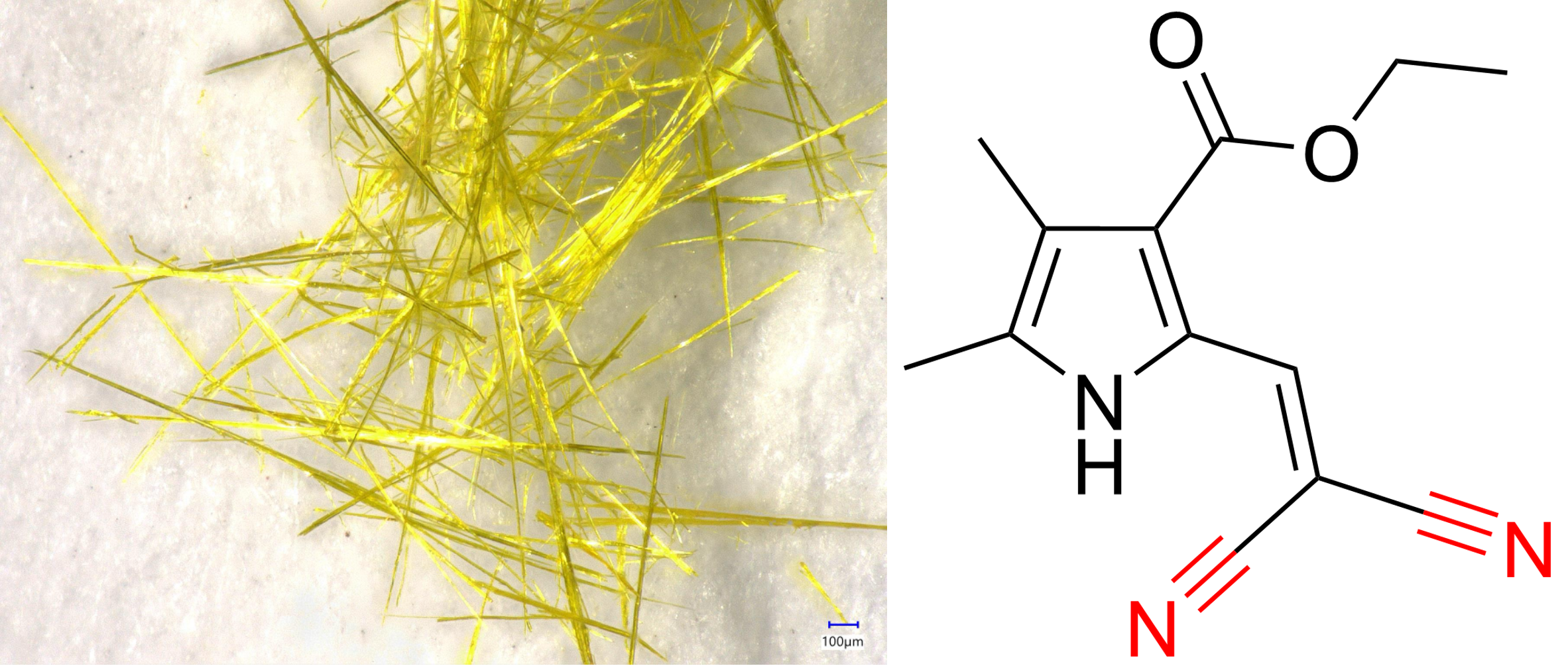
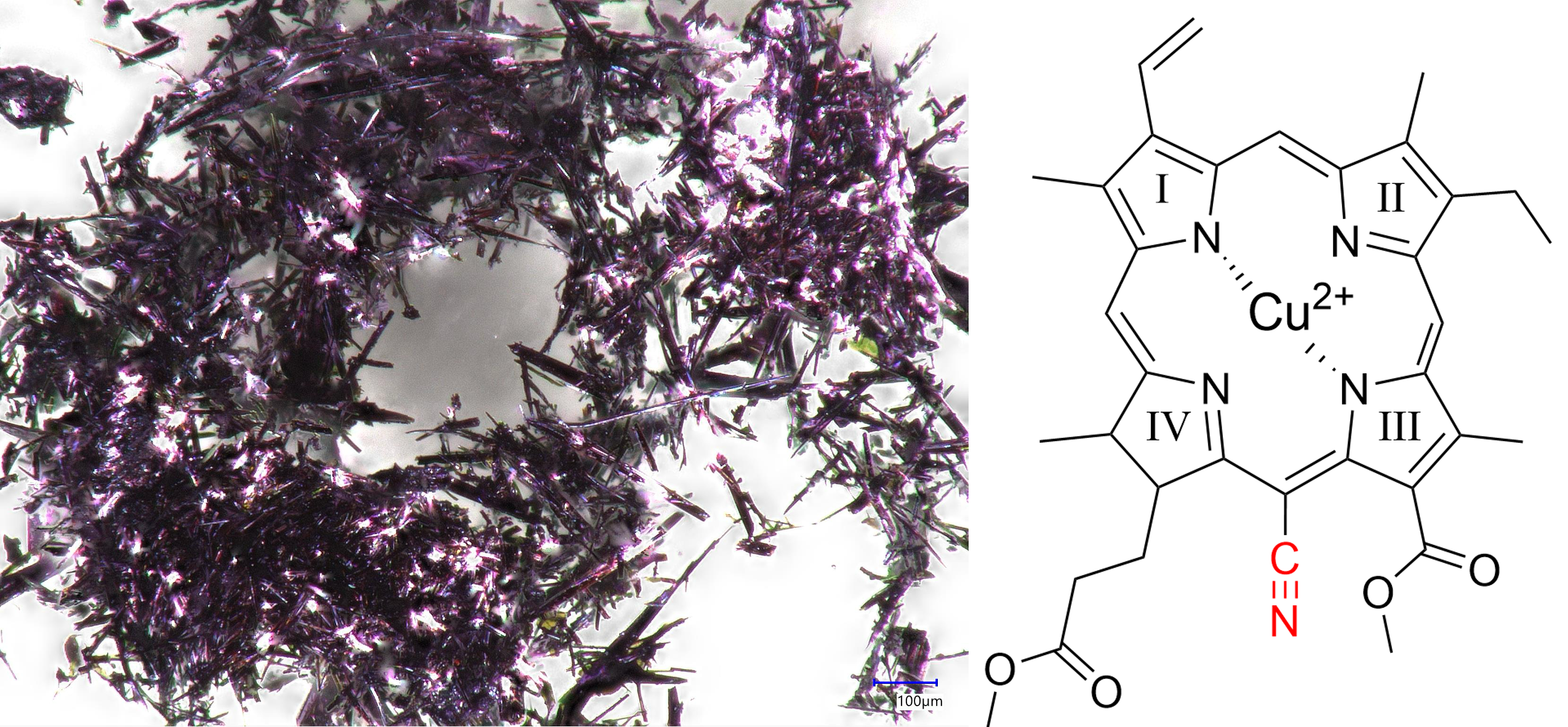
Currently, all cyanopyrroles and cyanoporphyrins from the collection are being systematically analyzed. The data again show the remarkable stability and purity of Fischer’s compounds. Since most of these cyano compounds are not commercially available, their characterization and provision for researchers in heterocyclic and porphyrin chemistry is of great value. Their use as synthons in chemical synthesis and as active agents — for example, in photodynamic cancer therapy — is now being enabled through this work.
Interview with Prof. Wolfgang Eisenreich
How did the project originate?
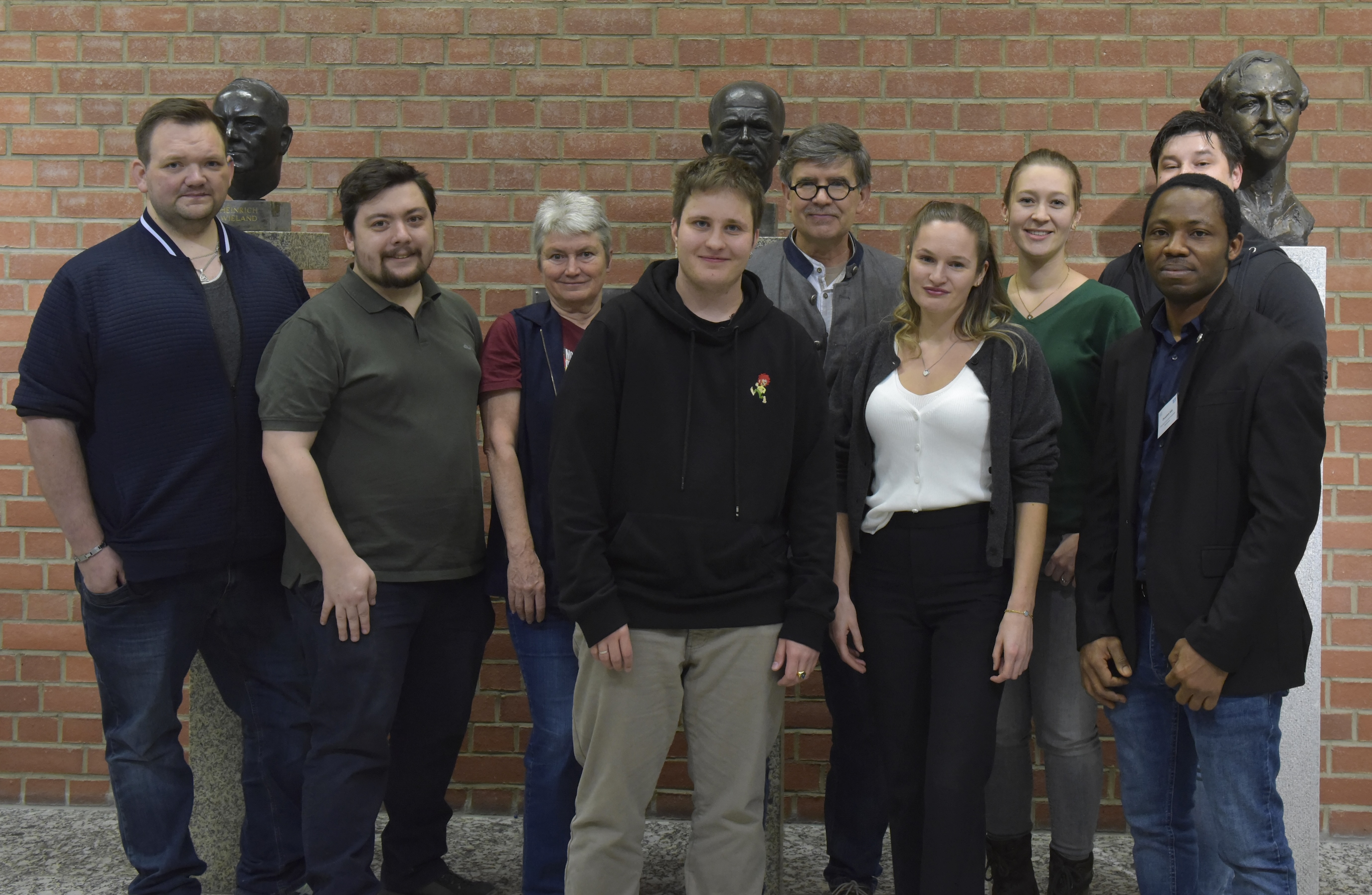
“It is truly a project of the heart, which we have been able to perfectly integrate into our ongoing research on discovering new bioactive structures and mechanisms of action. As long-time chairman of the Hans Fischer Society (a nonprofit organization that has preserved Hans Fischer’s legacy for decades), it was equally important to me to analyze this treasure trove of unique compounds from Fischer’s era for the first time with modern methods.
We’ve found that this project has also inspired many students. For every preparation, photographs and microscopic images are taken, followed by the acquisition of spectroscopic data. Everything is digitized and made publicly available in an online database. In this way, Hans Fischer’s heritage becomes visible and is preserved for future generations.”
What is your personal relationship to Hans Fischer and his work?
As a chemist, Hans Fischer is a great role model for me. His legacy is outstanding — not only documented by the Nobel Prize but also by the enormous number of his publications and, not least, the unique chemical collection that has survived almost a century in the ‘catacombs’ of TUM.”
Could you summarize the uniqueness of his work in his time?
Hans Fischer can be regarded as a pioneer of organic chemistry in the field of heterocyclic chemistry, particularly in the synthesis of porphyrins and related compounds. He was not only an exceptionally gifted chemist and professor at TUM’s Chair of Organic Chemistry, but also, as a physician, always deeply interested in the medical applications of his synthetic compounds. His work thus shaped modern medicinal chemistry and laid the foundation for the development of synthetic blood pigments and for photodynamic cancer therapy using suitable porphyrins.
The chemistry of Hans Fischer remains an important research field at the TUM School of Natural Sciences. Numerous research groups continue to study the synthesis, spectroscopy, and applications of nitrogen heterocycles such as porphyrins. One could therefore say that Hans Fischer shaped the very DNA of our university.
The interdisciplinarity exemplified by Hans Fischer—with a clear objective of linking fundamental science and applied research—continues to be one of our central guiding principles, as demonstrated by our recent first-place ranking in Germany’s interdisciplinary science ranking. The remembrance of Hans Fischer, especially in the context of the project presented here, is therefore of great importance to the entire TUM family. For our students in particular, working with the historical specimens provides a welcome opportunity to engage with the history of our university while gaining initial in-depth experience with modern analytical techniques, synthetic methods, and medical applications
What surprised you most during the creation of the publication?
We were genuinely astonished that the preparations have survived nearly a hundred years in such good condition. Equally remarkable is that the structures described by Fischer in his original papers are almost always confirmed by today’s analytical tools. This underscores the extraordinary chemical expertise of Hans Fischer and his colleagues, who were able to correctly determine complex structures using only the simple techniques available at the time.
What pleased me most, however, was that this project managed to ignite the enthusiasm of so many students.
Chemistry History Meets Future Research
The rediscovery of the Hans Fischer collection is not only a stroke of historical luck but also a treasure trove for modern drug discovery. Many of the compounds exhibit bioactive properties — for example, antibacterial effects or enzyme inhibition.
The group led by Prof. Wolfgang Eisenreich publishes all findings in a continuously growing, freely accessible database. The preparations themselves will in the future be made available to interested research groups through collaborations with TUM.
In this way, Hans Fischer’s legacy is not only preserved but also revitalized and advanced in modern science.
Publication:
The legacy of Hans Fischer – revision of one of the largest libraries of pyrroles and porphyrins, Journal of Molecular Structure 1348 (2025), 143309
https://doi.org/10.1016/j.molstruc.2025.143309
Further information and links:
- Wolfgang Eisenreich: https://www.bio.nat.tum.de/membrane/eisenreich-group/
- Link to database: https://mediatum.ub.tum.de/1775557?id=1775557&change_language=en
- Hans-Fischer-Gesellschaft (in German): https://hans-fischer-gesellschaft.de
- Hans Fischer – Nobel Prize 1930: https://www.nobelprize.org/prizes/chemistry/1930/fischer/biographical/
Press contact
communications(at)nat.tum.de
Team website